THE SUMMER SERVICE
When the cooling quits in Columbus humidity, start with the numbers
Chips: Blowing warm · Frozen coil · Short cycling · Silent unit · Weak airflow
A Columbus air conditioner fights two enemies at once: heat, and the humidity riding on it. July dew points sit in the low 60s, which is why a struggling system announces itself as a house that feels clammy at 74 degrees before it announces itself as a house that will not cool. Cap City Heating & Air repairs central air across the Columbus metro, most calls seen the same day. The diagnosis arrives the way it does on every Cap City job: what was measured, what it should read, and what yours read, then the full price before you decide anything. Start with a free, no-obligation estimate.
The failures we see every summer
It blows, but the air is warm
The indoor fan runs, the vents deliver room-temperature air, and the house climbs. The suspects live in two places: the outdoor unit, where a failed capacitor or contactor can leave the compressor and condenser fan sitting silent while the indoor half works on, and the refrigerant circuit, where a slow leak lowers capacity week by week until a hot day exposes it. Listening from the driveway is a real first reading: a running indoor fan with a silent outdoor unit is a specific story.
Ice on the lines, or a frozen coil
Ice means the coil got cold enough to freeze the moisture it pulled from your air, and then kept going. Airflow starved by a loaded filter or a weakening blower is one road there; low refrigerant is the other. Ice is a stop-and-thaw signal, not a run-it-harder one: a frozen system cools nothing, and the water it is storing goes somewhere when it melts. Turn the cooling off, let it thaw, and call with the story of when the ice appeared.
It short cycles on hot afternoons
On, off, on, off, never settling. An oversized system can live this way for years, cooling the thermostat's own hallway and quitting. A system that newly short cycles is reporting something: a failing capacitor letting the compressor stumble, a refrigerant charge off its mark, a condensate drain backing up into its safety switch, or a thermostat in a bad conversation with a supply vent. A system that starts behaving differently is sending a reading of its own: note what changed and when you first noticed it, because small changes are the cheap ones to catch.
The house cools, but will not dry out
In Columbus this is a cooling complaint in its own right. A system that short cycles, is oversized for the house, or runs with airflow set wrong will drop the temperature fast and leave the humidity behind, and the result feels like a cave in July. The readings that matter here are run time, temperature split, and indoor humidity, compared against what the house should hold. Maya runs most of these calls, and they are some of the most satisfying on the board: the equipment is often fine and the setup is not.
Weak air from the vents
Rooms far from the air handler get a whisper while near rooms get a gale, or the whole house feels underpowered. Blower speed, a collapsing or disconnected duct run, a filter doing harm, or a coil matted with years of dust can all sit behind it. Airflow is a number, measured at the registers and the return, and it decides which of those stories yours is.
The outdoor unit is loud, or suddenly louder
Condenser fans and compressors have a sound they make for years, and a change in it is a reading your ear takes for free. Grinding, buzzing that was not there in May, or a fan that starts hard and stops harder points at bearings, electrical parts wearing out, or a unit working against a coil matted shut with cottonwood and dust. Columbus cottonwood season alone explains a share of June calls.
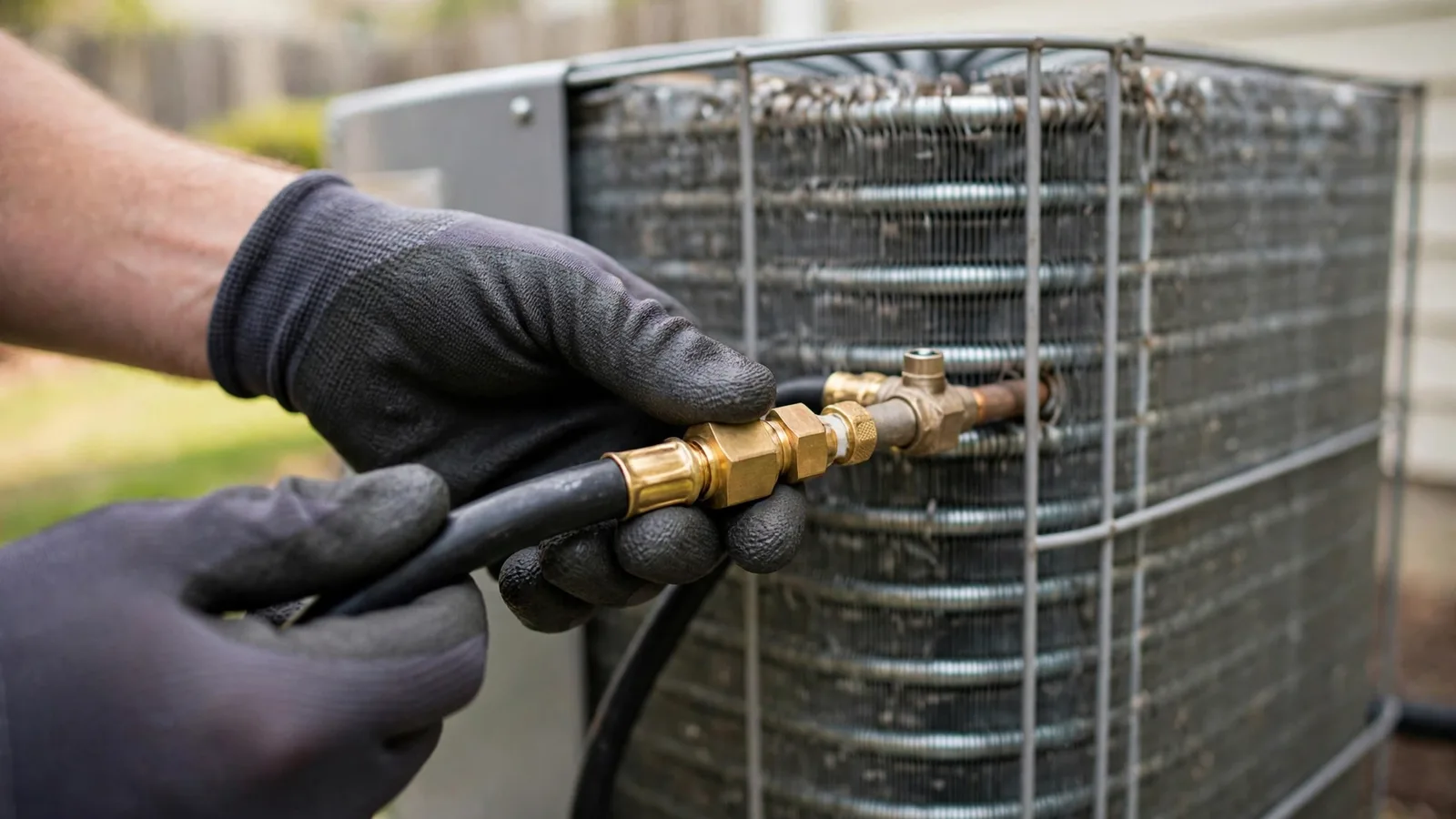
What AC repair typically runs in Columbus
The table below is a set of typical local ranges. Read it as planning numbers, not a quote: it cannot see your system from here. Your price comes after the diagnosis, covers the repair being discussed, and is yours to accept or turn down before any work starts.
| Repair | Typical range | Usual time |
|---|---|---|
| Most AC repairs | $200 to $900 | 1 to 3 hours |
| Capacitor replacement | $150 to $350 | About an hour |
| Contactor replacement | $200 to $450 | About an hour |
| Refrigerant leak repair and recharge | $600 to $1,800 | Half a day |
| Condenser fan motor replacement | $250 to $700 | 1 to 2 hours |
| Compressor replacement | $1,250 to $2,900 | Scheduled; often a replacement conversation |
| AC replacement, installed | $5,000 to $10,000 | A full day, scheduled |
| Full system replacement (furnace + AC) | $9,000 to $15,000 | Scheduled |
Why the ranges are wide: tonnage, refrigerant type, and access. Older systems running on phased-out refrigerant carry parts and refrigerant prices newer systems do not, which is why a leak repair on a twenty-year-old unit deserves the repair-versus-replacement conversation out loud, with both numbers on the table. Ask which refrigerant your system uses before you approve a recharge. The answer changes the math, and you are entitled to it.
Think of cooling as moving heat, and wringing water
An air conditioner does not make cold. It moves heat from inside the house to outside it, and on the way past the cold indoor coil, your air drops its water into a drain. Both halves leave readings: the temperature split between return and supply air, the pressures and temperatures on the refrigerant side, the amp draws on the motors doing the moving. When cooling fails, one of those numbers has stepped out of its band, and the job is finding which one before touching a part.
That discipline is the inheritance this company runs on. Derek learned the trade maintaining building systems where the log came first, and a Columbus split system rewards the same habit at house scale. Your description is the first entry: when it changed, what the air feels like, what the outdoor unit sounds like now. The instruments write the rest.
Guidance worth keeping, whichever company you call
- Numbers before opinions. Temperature split, pressures, amp draw: what was measured, what it should read, what yours read. A diagnosis stated as those three numbers makes any second opinion a short conversation.
- Ask which refrigerant your system uses before approving leak work or a recharge. Age and refrigerant type change what a repair is worth.
- Never run a frozen system. Ice is a symptom. Thaw first, then diagnose; running it frozen cools nothing and risks the compressor.
- Change the filter at the start of the season, and check it monthly through July and August. Half the weak-air calls in Columbus begin there.
House heating up now? Call for same-day help, or start with the free estimate.