OUR PRIMARY SERVICE
Furnace repair in Columbus, diagnosed in numbers you can keep
Chips: No heat · Won't stay lit · Cold rooms · Short cycling · Blank thermostat
A furnace picks its moment, and in Columbus that moment is usually a January night heading for the low 20s or below. Cap City Heating & Air is a small repair crew working the Columbus metro out of the south side. Call, and Eddie will get the story of what the system is doing; most Columbus heating calls are seen the same day. At your house, you hear the diagnosis as readings: what was measured, what it should read, and what yours read. Then the full price of the repair, before you decide anything. Start with a free, no-obligation estimate.
The failures we see every winter
It will not light, or lights and quits
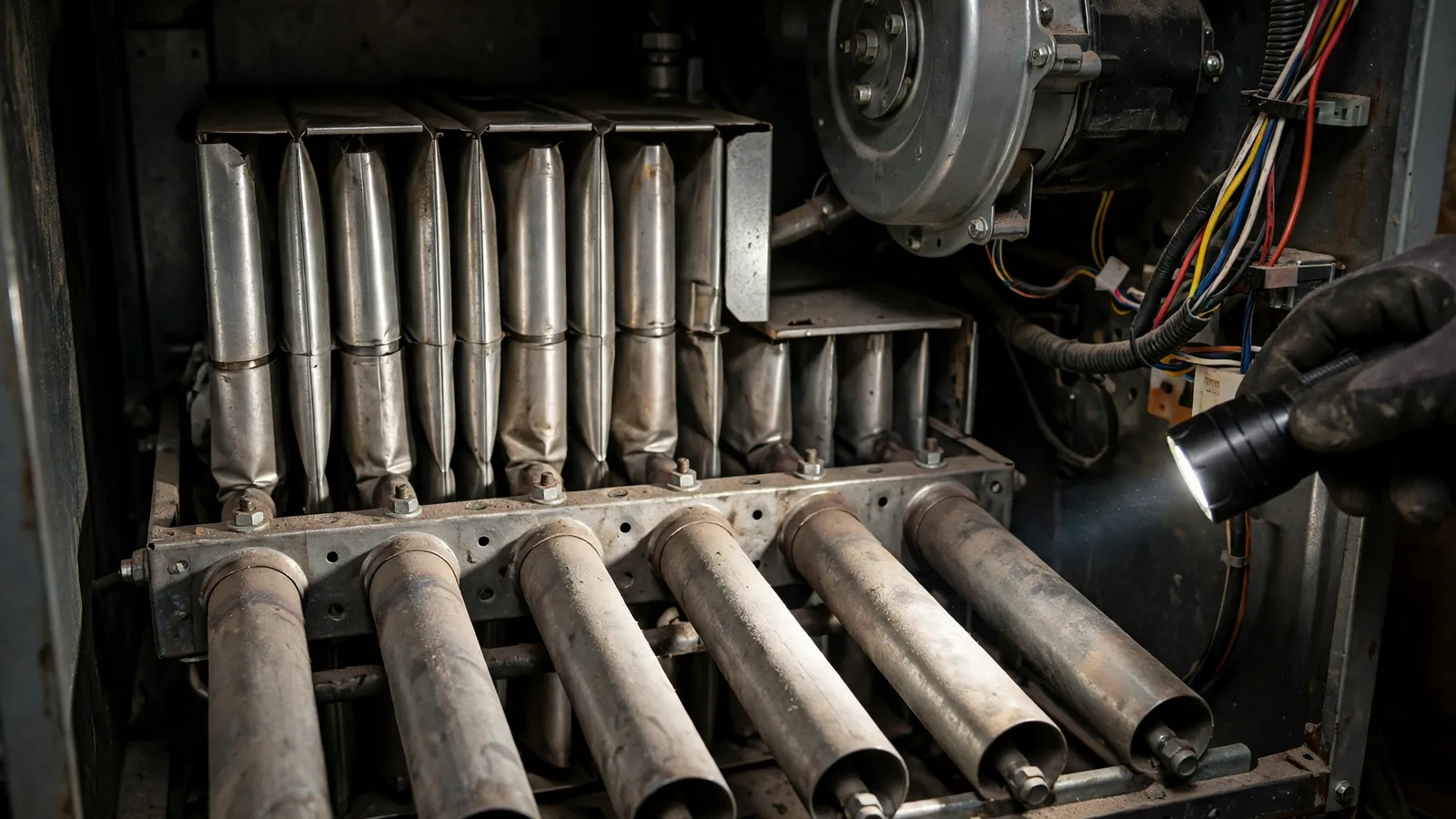
The classic no-heat call. A modern furnace proves itself in sequence: the inducer starts, the ignitor glows or sparks, the flame catches, and a sensor confirms fire before the system commits. A failure anywhere in that chain stops the show, on purpose, because the sequence is a safety argument the furnace makes every cycle. Ignitors and flame sensors are the most common casualties, and they are usually the kindest repair on this page. The readings tell us which link in the chain let go.
It runs, but the house stays cold
Heat is being made and not delivered, or made at half strength. A filter loaded enough to strangle airflow, a blower losing speed, duct runs leaking into a crawlspace, or a burner dropping out early can all produce the same complaint with very different repairs behind it. This is the call where measuring first pays for itself: the temperature rise across the furnace and the airflow numbers separate a ten-minute explanation from a motor replacement.
It short cycles
On for three minutes, off for five, all day. Short cycling wears every part it touches and heats a house in sips instead of drinks. The causes stack from simple to serious: a filter choking the system until a safety switch trips, a thermostat placed where the sun or a supply vent fools it, an oversized furnace heating its own closet and satisfying itself, or a safety limit doing exactly its job on a system that is genuinely overheating. Treat short cycling as a message, not a personality trait.
Cold rooms at the ends of the house
Every Columbus housing era has its version: the upstairs bedroom in a Clintonville two-story, the addition in Grove City, the far rooms of a ranch in Whitehall. Sometimes the furnace is innocent and the ductwork is undersized, disconnected, or never balanced for the house as it exists now. Sometimes the system is simply losing capacity with age. Either way, the honest answer starts with temperatures measured in the cold room and at the furnace, compared.
The thermostat is blank, or lying
A blank screen can be a dead battery, a tripped safety switch cutting power, or a furnace problem wearing a thermostat costume. A thermostat that reads 72 in a room that feels like 65 may be placed on a sunlit wall or above a supply register. Small parts, big consequences, and worth ruling out before anyone prices a furnace.
A heat pump that cannot keep up, or never stops
Columbus heat pump homes ask the most of their equipment in January. A heat pump moves heat rather than making it, and on the coldest days it runs long hours and leans on backup heat. That part is normal. Ice that builds and never clears in the defrost cycle, a system losing ground hour by hour, or backup heat carrying the house alone for days is not, and each of those has readings behind it.
What heating repair typically runs in Columbus
The table below is a set of typical local ranges. Read it as planning numbers, not a quote: it cannot see your furnace from here, and no table can. Your price comes after the diagnosis, covers the repair being discussed, and is yours to accept or turn down before any work starts.
| Repair | Typical range | Usual time |
|---|---|---|
| Most furnace repairs | $150 to $700 | 1 to 2 hours |
| Ignitor or flame sensor repair | $150 to $400 | About an hour |
| Thermostat replacement | $150 to $450 | About an hour |
| Blower motor replacement | $450 to $1,200 | Half a day |
| Control board replacement | $200 to $600 | 1 to 2 hours |
| Furnace replacement, installed | $4,500 to $8,500 | A full day, scheduled |
Why the ranges are wide: Columbus heats everything from a compact ranch in Obetz to a three-story Victorian Village house with a furnace room like a closet, and parts prices follow the equipment, not the ZIP code alone. A variable-speed blower motor and a simple single-speed motor are different parts at different prices doing the same job description. What the readings were, and what part the range you are quoted is built on, are the two things that matter. Both answers fit on an index card.
Think of heating as a chain of proofs
Derek learned this trade maintaining building systems in the Army, and a furnace rewards the same thinking. It is not a box that makes heat. It is a chain of proofs, run in order, every time it fires: air moving, ignition proven, flame confirmed, heat exchanged, air delivered at the right temperature, exhaust leaving safely. A failure is one link reporting a number outside its band.
That is why the first question on our calls is never "what part," it is "what did it do, and when did it change." A furnace that ran all December and quit on the coldest night is telling a different story than one that has short cycled since October. Your description is the first reading. The instruments supply the rest.
Guidance worth keeping, whichever company you call
- Numbers before opinions. What was measured, what it should read, what yours read. A diagnosis in those three numbers makes a second opinion fast and a next-winter comparison possible.
- Ask which part failed, and what it does. A part name without its job in the chain is vocabulary, not a diagnosis.
- Change the filter before you conclude anything. A loaded filter causes more strange heating behavior than any other single item in the house, and ruling it out costs almost nothing.
- On a no-heat night, check the simple four first: thermostat set to heat and above room temperature, furnace power switch on, breaker untripped, filter in place. Then call, and tell us what you found.
Why this page leads the site
Heating is the primary service because Columbus winter is the higher-stakes season. A cooling failure in July makes a house miserable; a heating failure in January makes it urgent, and the furnace installed base spans a century of housing, from German Village cellars to this year's subdivisions in Pataskala. It is the work Derek trained for, the work the crew is built around, and the work most Columbus calls are about.
House losing heat now? Call for same-day help, or start with the free estimate.